New EaP CSF interim Director

Martin will lead the work of the EaP CSF Secretariat during current Director Tania Marocchi’s upcoming maternity leave.

A native from the Czech Republic, Martin brings more than 20 years of experience in non-profit management having previously worked for Caritas and the Danish Refugee Council. He is also familiar with the Eastern Partnership region having recently led Oxfam’s regional Response Programme in Ukraine.

“Martin brings a wealth of experience that can greatly support the advancement of EaP CSF’s mission and activities. During my absence, he will continue supporting the contribution of EaP civil society organisations in  political debates and policy reforms. The beginning of 2025 shows us, if ever there was a need, that the voice of civil society is even more essential to bolster our democratic values. I am confident Martin’s wealth of experience and regional knowledge will help the Eastern Partnership Civil Society Forum in supporting the democratic and European aspirations of our friends in the Eastern Partnership” declared Tania Marocchi, Director of the EaP CSF Secretariat.

“I am delighted to take on this role as interim director of the Eastern Partnership Civil Society Forum. Recent political developments have shown both the great upheaval of the international world order of the last 70 years but also the strong aspirations for democracy and freedom of citizens and civil society organisations across the Eastern Partnership. I look forward to working with our partners towards the European future of our Eastern Partnership neighbours” said Martin Vane, interim Director of the EaP CSF Secretariat.

Towards a new, European chapter in Armenia’s history

We, the Eastern Partnership Civil Society Forum (EaP CSF) and its Armenian National Platform welcome the adoption by the Armenian National Assembly of the law launching the Republic of Armenia’s accession process to the European Union. This marks a pivotal and historic moment that confirms Armenia’s strategic orientation and places European integration at the core of its state-building agenda.

As stated in the newly adopted law:

“The Republic of Armenia, aiming to develop democratic institutions, improve the well-being of society, strengthen the country’s security, resilience, and the rule of law, declares the launch of the process of the Republic of Armenia’s accession to the European Union.”

This declaration is far more than symbolic. It carries profound political, legal, and societal significance. It lays the foundation for a new chapter in Armenia’s modern history, anchored in the principles of democracy, human rights, good governance, and the rule of law. At a time of mounting geopolitical challenges, this step brings clarity to Armenia’s foreign policy direction and opens the path toward a lasting peace, development, and security within a European framework.

Armenian civil society has been a steadfast advocate for European integration. Over the past decade, the Armenian National Platform of the Eastern Partnership Civil Society Forum has consistently supported reforms aligned with EU standards, promoted participatory democracy, and contributed to the strengthening of public institutions. A clear reflection of this commitment is the fact that the draft law titled “On the Launch of the Process of the Republic of Armenia’s Accession to the European Union” was submitted to the National Assembly through the efforts of the “Eurovote” civic initiative, whose founding members are primarily representatives of organisations within the EaP CSF Armenian National Platform.

Commending its efforts to bring Armenia closer to EU, we call on the Government of Armenia to:

  • Develop and publish a comprehensive national strategy for EU accession, based on a transparent and inclusive consultation process involving civil society and other stakeholders,
  • Establish a detailed roadmap with clear timelines, reform priorities, and measurable benchmarks aligned with the Copenhagen criteria,
  • Resolve institutional and legal inconsistencies that could hinder the start of the EU integration process, most notably by formally expressing Armenia’s intention to withdraw from the Eurasian Economic Union (EAEU). Despite the existing agreements with the EAEU, significant steps have been taken to reduce Armenia’s dependencies on Russia and to strengthen Armenia’s security resilience,
  • Establish a dedicated Minister position tasked with leading and coordinating the EU accession agenda, oversee inter-agency efforts, and drive the implementation of European reforms. This proposal has already been supported by civil society, MPs and non-parliamentary democratic political forces.

We also urge the Armenian Government to initiate formal dialogue with the European Union on signing a new, updated agreement that reflects the logic and spirit of the newly adopted law, including provisions for the establishment of a Deep and Comprehensive Free Trade Area (DCFTA). These steps are essential to unlocking the full benefits of European integration: access to EU markets, increased investment, innovation, and institutional reform mechanisms that support long-term stability and prosperity.

At the same time, we call on the EU and its Member States to:

  • Intensify political dialogue with the Armenian Government to strengthen Armenia’s resilience. Armenia’s closer integration with the EU strengthens its resilience amid foreign and regional threats. Physical and hybrid threats in the form of foreign information manipulation, interference and cyber-attacks continue to undermine the security architecture of the country and will intensify in view of 2026 parliamentary elections. The continued presence of the EU’s civilian monitoring mission along the Armenia-Azerbaijan border is vital and must be maintained until a lasting peace agreement is signed by both sides and durable confidence-building measures are in place. Armenian civil society continues to play a vital role in strengthening Armenia’s socio-economic resilience and enhancing human security in the country.
  • Facilitate further EU integration in light of Armenia’s explicitly articulated European aspirations, bolster its relations with Armenia and support the Armenian Government and the people of Armenia in the country’s democratic path towards a fully-fledged ‘3+1’ approach that includes the Trio Associated countries and Armenia,
  • Provide staunch political support to peace efforts and facilitate the unblocking of transport links with Azerbaijan.

Civil society must be recognised as a strategic partner in both Armenia’ decision-making and Armenia’s bilateral relations with the EU. Public engagement, civic monitoring, inclusive and meaningful participation in policymaking are vital to ensure that the EU integration process is not only successful but also reflects the will of the Armenian people.

Armenia’s decision to launch the EU accession process is a bold and forward-looking choice. One that will reshape Armenia’s role in the region. It sends a clear message to the Armenian citizens, EU and international partners: Armenia’s future lies in a democratic, secure, and rule of law-based Europe.

The Eastern Partnership Civil Society Forum and its Armenian National Platform stand ready to accompany and support this historic journey – through expertise, dialogue, and active engagement – so that European integration becomes not just a foreign policy goal, but a lived and inclusive reality for all in Armenia.

The Steering Committee of the Eastern Partnership Civil Society Forum and the Armenian National Platform

Additional resources

Read or download the statement in PDF below.

Open letter on improvements to the Ukraine Facility Regulation

On 28 February, the Eastern Partnership Civil Society Forum co-signed an open letter proposing improvement to the Ukraine Facility Regulation.

The letter was addressed to Commissioner for Enlargement, Ms Marta Kos; Director-General for Enlargement and the Eastern Neighbourhood, Mr Gert Jan Koopman and Eu AMbassador and Head of the EU Delegation to Ukraine, H.E. Katarína Mathernová.

The text of this letter is available below and a PDF copy, with annex and full list of signatories, at the bottom of this page.


Dear Commissioner Kos, Director-General Koopman, and Ambassador Mathernová,

We, the undersigned Ukrainian and European civil society organisations, appeal to you concerning the implementation of the Ukraine Facility Regulation as it reaches its one-year mark.

In light of recent geopolitical developments, the Ukraine Facility now more than ever constitutes a vital support mechanism for Ukraine, providing EUR 50 billion over the 2024-2027 period. This funding is helping Ukraine in its efforts to maintain macro-financial stability, promote recovery, and strengthen governance on its path to EU accession.

However, we believe the Ukraine Facility could have a far greater impact. To this end, we urge the European Commission to consider the following recommendations:

  • Increase the quality of documents produced within the Ukraine Plan to be conducive to effective implementation and sustainable reforms.
  • Improve the visibility and transparency of the Ukraine Investment Framework for the public and civil society organisations.
  • Streamline climate and environmental objectives, including biodiversity conservation and the principle of ‘do no significant harm’, ensuring they apply to 20 per cent of total financing under the Ukraine Investment Framework and investments within the Ukraine Plan.
  • Establish a platform for civil society organisations to submit their opinions along with a procedure for transparently tracking and incorporating their opinions into official documents.
  • Ensure Ukrainian municipalities receive access to 20 per cent direct financial support from the Ukraine Plan through newly developed methodologies for submitting project concepts for public investment funding.
  • Prioritise grant support for Ukrainian civil society organisations.

We hope these recommendations will also contribute to the Commission’s annual report to the European Parliament and Council on progress towards achieving the objectives of the Ukraine Facility Regulation.

More detailed recommendations are provided in the Annex to this letter (see below).

Thank you in advance for your consideration and support.

Additional resources

Click here to download the open letter.

No to weaponised legislation in Georgia!

The Eastern Partnership Civil Society Forum (EaP CSF) Steering Committee calls on the Georgian authorities to cease weaponising laws to serve the interests of the ruling Georgian Dream party to the detriment Georgia’s European future.

Since the conduct of controversial parliamentary elections in Georgia (26 October 2024), the country has seen daily street demonstrations, where Georgian citizens come together against the country’s descent into authoritarianism and exercise their rights to freedom of assembly and expression through protests. These rights have been significantly and rapidly curtailed through the adoption of numerous legislative amendments by the ruling Georgian Dream party.

A lengthy list of laws has been adopted without respect for the principles of democratic lawmaking. This includes amendments in the law ‘on Assemblies and Demonstrations,’ ‘Administrative Offences Code’ and Georgia’s ‘Criminal Code’. Through these laws, the ruling party has unjustifiably restricted freedom of expression and increased criminal and administrative penalties.

It is evident that the criminalisation of peaceful forms of expression, and the imposition of disproportionately high administrative fines and prison sentences, is a result of Georgian Dream’s political ambitions to eliminate anti-government protests, rather than an objective necessity serving a legitimate goal.

For many years, Georgia’s independent civil society and media have been the main driving force for the country’s democratic transformation. However, under the Georgian Dream party’s rule, independent CSOs and media continue to be targeted by ‘weaponised legalism’.

After the adoption of the infamous law ‘on the transparency of foreign influence’, the Georgian Parliament’s Legal Issues Committee endorsed, in its first reading on March 3, a new bill on ‘Foreign Agents Registration Act’ (FARA) which intends to further broaden the scope of so-called ‘Foreign Agent Law’ and tighten its grip on Georgian civil society and media. Non-compliance with FARA will be punishable by up to 5 years in prison. Meanwhile, the parliamentary committee on sectoral economy approved in the first reading amendments to the Broadcasting Law, that would considerably tighten media regulations. The list of laws initiated by the ruling party also includes a bill that intends to restrict funding of media from foreign sources and ‘establish standards for media objectivity and journalistic ethics’, as well as ‘define institutional mechanisms for monitoring and safeguarding these standards’, all tools that could be used to silence independent media and push it to self-censorship.

Moreover, the ruling party intends to remove existing legal guarantees for CSOs’ participation in public decision-making processes, which will further undermine public consultation and meaningful participation in the lawmaking process. Georgian authorities have recently introduced a state-managed grant system for the civil sector which can be used as a tool to restrict the autonomy of civil society organisations.

The EaP CSF Steering Committee stands in solidarity with the Georgian people and civil society. We strongly condemn the use of laws to serve the political ends of the ruling Georgian Dream party, disregarding the democratic and European aspirations of the Georgian people.

We therefore call on:

The Georgian authorities

  • To end their systematic crackdown on civil society and independent media, and to cease weaponising laws to suppress dissent and political pluralism, intimidate peaceful protesters, silence independent media and civil society organisations;
  • To conduct new parliamentary elections in a free and fair manner, in order to resolve the ongoing political and constitutional crisis;
  • To immediately and unconditionally repeal all laws that unjustifiably restrict the civil and political rights of Georgian people, including recent amendments in law ‘on Assemblies and Demonstrations,’ ‘Administrative Offences Code’ and Georgia’s ‘Criminal Code’;
  • To free all the people who have been unjustly arrested during anti-government protests;
  • To uphold democratic rights and fundamental freedoms, and align its actions with the Georgian people’s aspiration for European integration.

The European Union and its Member States

  • To condemn the enactment of draconian legislation that unjustifiably restrict Georgian people’s civil and political rights;
  • To apply sanctions targeting Bidzina Ivanishvili and Georgian Dream party’s key political figures responsible for Georgia’s democratic backsliding;
  • To intensify political and financial support for Georgian civil society, media and human rights defenders;
  • To organise visits in Georgia and meet protesters and civil society representatives, showing them support for their cause and requests;
  • To continue to acknowledge and support the European aspirations of the Georgian people;
  • To invite civil society and academia instead of Georgian Dream representatives to high-level meetings ;
  • To increase pressure on the Georgian Dream party to release the people who have been arrested and continue supporting the individuals who have been charged with criminal and administrative offences.

The wider international community and donor agencies

  • To provide stronger political and direct financial support to Georgian civil society organisations and media.

The Steering Committee of the Eastern Partnership Civil Society Forum

Meet the Belarusian activist working to end human rights violations

This month, EaP CSF talked to Enira Bronitskaya about the situation in Belarus. Enira is a woman human rights defender and a member of the human rights organisation and EaP CSF member Human Constanta. Enira has extensive experience and expertise on questions of political rights, torture and inhuman treatments, rights of vulnerable groups (including persons with disabilities and migrants) as well as anti-discrimination. She works as a consultant for the OSCE Office for Democratic Institutions and Human Rights (ODIHR). 

What is the current situation for human rights in Belarus? 

The human rights situation in Belarus remains dire, with daily repression continuing unabated. The scope of these violations has expanded, targeting not only vocal dissenters but virtually anyone. This repression undermines civil, political, economic, social, and cultural rights.  

Opposition leaders face imprisonment or exile. As of January 2025, 1,256 political prisoners remain incarcerated. Despite constitutional guarantees of freedom of association, Belarus has effectively dismantled political and civil society activities. The number of political parties has plummeted from 28 in 1999 to just four post-2020, with only one, Belaya Rus, successfully registering since 2000. Civil society organisations have suffered a similar fate, with over 1,700 groups liquidated or forced to dissolve since 2020. The government has criminalised participation in unregistered organisations, reinstating this provision in 2022 after briefly removing it in 2019. The first conviction under this law occurred in August 2024. 

Freedom of expression and the prohibition of censorship, enshrined in the Constitution, are disregarded. Belarus ranks 167th out of 180 countries in the 2024 Press Freedom Index, reflecting severe media restrictions. Individuals face criminal penalties for defamation or insulting authorities, with over 700 convictions for insulting the president. Broad and ambiguous definitions of “prohibited information” stifle criticism of officials and restrict access to information. The government has banned nearly 6,000 information sources as “extremist” and labelled 25 major media outlets as “extremist formations.” At least 42 journalists have been imprisoned, further limiting public access to independent information and undermining voters’ ability to make informed decisions. 

How does the January 26 vote reflect the lack of a free and fair electoral process in Belarus and how does it further consolidate Lukashenka’s authoritarian rule?  

For the first time in Belarus’s history as an independent state, presidential elections were held without the participation of opposition candidates. Although four other candidates ran alongside Aliaksandr Lukashenka, none of them positioned themselves as opponents to the main candidate, challenged his platform, or criticised the current government. All registered candidates were approved by the authorities and played the roles assigned to them in the electoral process. 

The January 26 vote reinforces the authoritarian nature of power in the country, closes the paths for democratic development and leaves Belarus in a state of stagnation, suppressing hopes for freedom and justice.  

How should the international community — particularly the European Union, the United States, and neighbouring EaP countries — respond to the results of the vote? What options are there on the table?  

The European Parliament on 22 January adopted the resolution and call on the EU to reject the upcoming presidential election in Belarus on 26 January as a sham. The Parliament consider that the European Union should refuse to recognise Aliaksandr Lukashenka’s anticipated victory. The Parliament reaffirms its support for the Belarusian people in their fight for democracy and human rights and want the scope of EU sanctions against Belarusian authorities to be broadened. I fully support this position.  

Despite demonstrating absolute power and control during these elections, Lukashenka still showed on several occasions that the opinions of others matter to him. Albeit belatedly, he attempted to invite observers from the OSCE/ODIHR, granted access to some international journalists, and dedicated 4 and a half hours on election day to a press conference, attempting to justify himself and boost trust. 

However, this does not change the fact that the elections were conducted in complete disregard of international standards and national legislation. The fundamental conditions for holding free and genuine elections were absent, and thus the results cannot be considered legitimate, nor can the authority of the “elected” president. 

The peaceful conduct of the elections cannot erase the serious human rights violations. Only genuine progress in the field of human rights and the release of all political prisoners can serve as a basis for restoring cooperation with the Belarusian authorities. 

You can find out more about the work of Enira and Human Constanta on their website.

More from our “Meet our Member Series”

Click here to see all our articles in this serie.

Stop the steal: no deal without Ukraine!   

Brussels, 24 February 2025 – The Eastern Partnership Civil Society Forum condemns President Trump’s turnaround and sidelining of Ukraine in discussions with Russia. We call on the European Union and its Member States to show unity and stand firm against Russia’s war of aggression against Ukraine and the Ukrainian people 

24 February 2025 marks the grim milestone of the third year since Russia’s unprovoked full-scale invasion of Ukraine. Over the past three years, Ukraine and the Ukrainian people have demonstrated heroic resilience in the face of relentless Russian aggression, and in defending freedom, peace, democracy and the European values. Since 24 February 2022, Russia killed over 11,000 civilians and committed over 156,000 documented crimes of aggression and war crimes against Ukraine and the Ukrainian people, inflicting devastating losses and causing significant destruction to civilian infrastructures*. Systematic attacks have ravaged indiscriminately residential areas, hospitals, energy facilities, ports and the environment, leaving a profound humanitarian and economic toll. 

Russia continues to destabilise Ukraine and the whole Eastern Partnership region through acts of extraterritorial violence, human rights violations, interference, propaganda and hybrid threats, making Russia’s full-scale invasion of Ukraine the primary threat to the Eastern Partnership countries. 

The recently held Munich Security Conference highlighted international leaders’ deepening divisions on Russia’s war of aggression and European security. Recent developments, including US-Russia talks in Saudi Arabia and US President Trump’s direct social media attacks towards Ukrainian President Zelenskyy, are extremely worrying signs for the necessary continuation of a staunch political, military and financial support to Ukraine.

In light of the ongoing peace talks:

  • The European Union and Ukraine must seat at the negotiating table to end Russia’s war of aggression. Ukraine’s exclusion from the table negotiating its future would be an unacceptable disregard of its sovereignty and a direct incentive for future acts of aggression against Europe. Any agreement made without Ukraine’s full participation would lack legitimacy, risk failing to meet the needs and security interests of its people, and set a dangerous precedent where aggressors dictate terms over their victims. Lasting peace can only be achieved through a dialogue that respects Ukraine’s sovereignty and territorial integrity, rather than through external deals that disregard its rights and agency. 
  • All peace negotiations should align with the Peace Formula proposed by Ukraine. Negotiations should ensure that the principles and conditions based on International Law and set forth by Ukraine are central to any discussions aimed at achieving a just and lasting peace, are supported by security guarantees, both in reconstruction and as a future member of the EU. These guarantees must include clear provisions that Russia will no longer be a threat to Ukraine and to Europe. Peace negotiations should include a clear timeline for Ukraine’s NATO membership, 
  • The sovereignty of Ukraine, the integrity of its territory and its pre-2014 borders must be respected

The emergency summit held in Paris by European leaders exposed divisions in a moment when the European Union should remain united and speak with one strong voice to respond to the rising threats to Ukrainian sovereignty. Therefore, we call on the EU and its Member States to: 

  • Take bolder decisions in continuing to provide political, humanitarian, military and financial support to Ukraine to achieve a just and long-lasting peace,  
  • Maintain Ukraine’s integration into the EU as a key priority on the Union’s political agenda. Advancing Ukraine’s accession process and securing its victory in the war of aggression require unwavering commitment of the EU and its Member States, 
  • Continue offering essential support to Ukraine in its defence efforts by providing military aid, including weapons, ammunition, equipment, intelligence, and cybersecurity assistance, 
  • Following the adoption of the 16th package of sanctions, continue the active adoption of new packages of sanctions against Russia, strengthening credible measures to better prevent and monitor sanctions circumvention, 
  • Make all Russian State financial assets frozen in the EU available for the reconstruction of Ukraine
  • Enhance support for Ukrainian civil society and independent media, amplifying their voices across the EU and in high-level discussions on Ukraine’s security, post-war recovery and reconstruction processes,  
  • Implement meaningful measures to safeguard civil society activists in Ukraine who bravely address the needs of civilians affected by the consequences of Russia’s attacks and crimes against the Ukrainian people. 

The legal foundations recently laid down for the establishment of a Special Tribunal for the Crime of Aggression against Ukraine, and the creation of an International Claims Commission mark considerable progress to deliver justice for Ukraine and the Ukrainian people. Therefore, we call on the international community to: 

  • Ensure full accountability for the crimes perpetrated by Russian authorities and military forces in Ukraine. International prosecutors and judicial bodies should take decisive action to hold those responsible for crimes committed against the Ukrainian people accountable, ensuring that justice is served for the victims of Russian grave violations, 
  • Enhance support to Ukrainian national authorities in conducting national investigations and prosecutions related to Russian crimes of aggression, and in securing key evidence for future prosecutions. 

In light of the recent USAID funding freeze of American foreign aid programmes, the Eastern Partnership Civil Society Forum urges the Donor Community to bridge the gap created by the sudden and unprecedented USAID stop-work order and call for the allocation of additional funds to support civil society and independent media, and humanitarian projects in Ukraine. 

The Eastern Partnership Civil Society Forum continues to stand united in its full support for Ukraine and the Ukrainian people in their heroic resistance for freedom and a democratic European future, and in honouring the victims of the Russia’s war of aggression. 

Slava Ukraini! 

The Steering Committee of the Eastern Partnership Civil Society Forum 


* See war.ukraine.ua and also the Ukrainian MFA for the most up-to-date numbers. Actual numbers might be considerably higher, as information from many locations with intense hostilities is not yet available or confirmed.


“Today marks the 3rd anniversary of the full-scale phase of a war that, in reality, started 11 years ago. This whole time, the people of Ukraine have been courageously resisting Russian aggression. They stand as the sole frontline defenders not only of Ukraine but of the whole of Europe from Putin’s criminal intentions. 

The price of Europe’s freedom is measured in the thousands of Ukrainian lives lost, military and civilians, as well as immense material and environmental destruction. 

Russia’s objective is to eradicate Ukraine’s independence as a nation. This is but a first step towards western expansion. With the United States likely to reduce their support, Ukraine needs Europe to step up. Ukraine and Europe need to strengthen their efforts to work towards a sustainable and just peace on the European continent and create the conditions that would deter any Russian intent to resume their wars of aggression.” 

Ruslan Havryliuk, National Facilitator of the Ukrainian National Platform of the Eastern Partnership Civil Society Forum

Additional resources

Download this statement in PDF format.

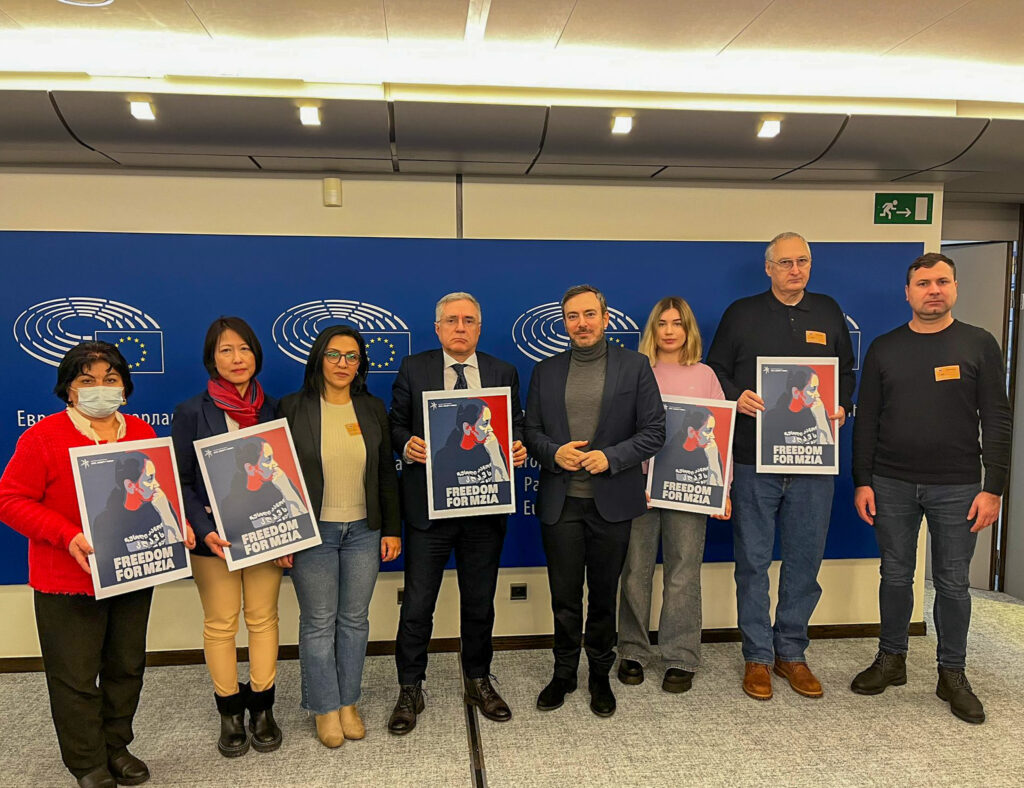
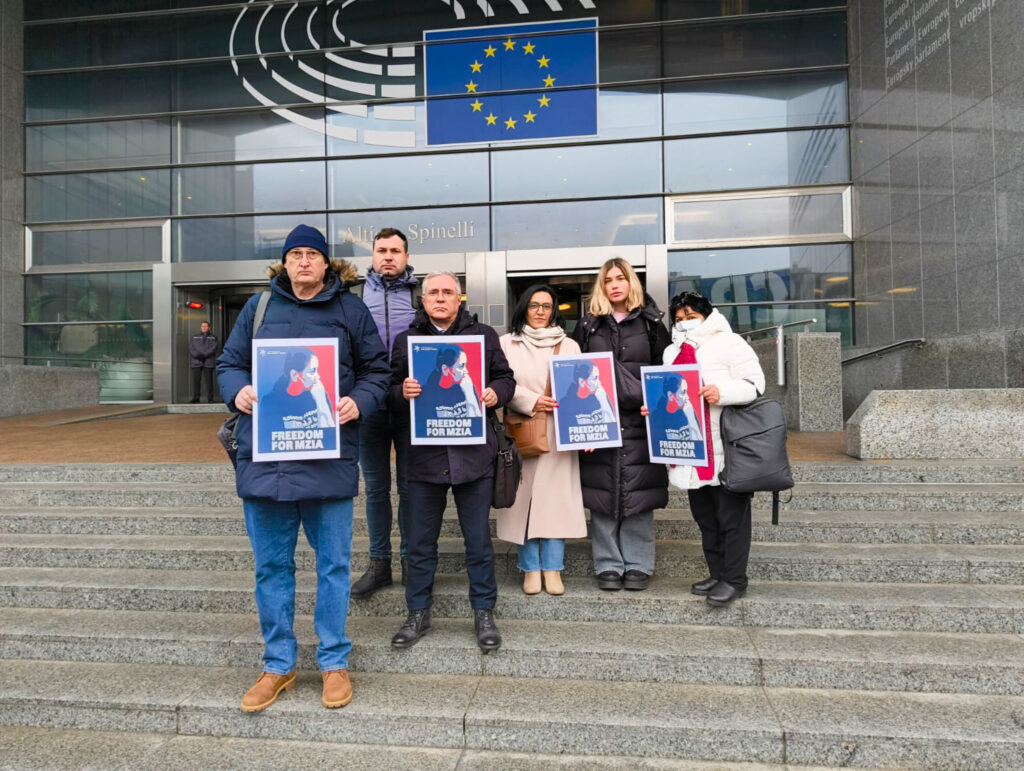
Release Georgian journalist Mzia Amaghlobeli!

The Eastern Partnership Civil Society Forum (EaP CSF) Steering Committee is expressing its concerns over the arrest and pre-trial detention of a prominent Georgian Journalist Mzia Amaghlobeli and calls for her immediate release. Prominent Georgian journalist Mzia Amaghlobeli is the founder of two independent media outlets, Batumelebi and Netgazeti, renowned for their balanced and impartial coverage of Georgia’s political affairs.

Brussels, 6 February 2025

On 11 January 2025, Georgian journalist Mzia Amaghlobeli was first detained when she posted a banner calling for a nationwide strike on the fence outside the Batumi police department in an act of solidarity with her colleague, who was previously detained for the same action. Shortly after her release, she was detained again for slapping a Batumi Police Chief who had insulted her. Despite the circumstances, the Georgian Prosecutor’s Office has charged her with ‘attacking a police officer,’ a criminal offence that carries a prison sentence of 4 to 7 years.

‘The charges brought against me are the result of repressive, traiterous, violent processes repressing free speech and expression, which has been taking hold on our lives for the past year in the shape of dictatorship. I will not abide by this regime’s agenda. I will go on hunger strike. Freedom is more valuable than my life,’ – Amaghlobeli wrote in an open letter on 20 January.

Amaghlobeli’s lawyer has stressed that her action does not constitute a criminal offence as it has not caused any harm that would require criminal liability.

Furthermore, the lawyer has reiterated that since her detention, she has been subjected to degrading treatment. She was verbally assulted by the same police chief, who also attemped to phisically harm her several times at the police station. He also spet in her face and Amaghlobeli was denied access to water and toilet facilities. 

Following her detention, Amaghlobeli has been on hunger strike since 14 of January, and her health is rapidly deteriorating. Georgian courts have refused to grant her release before her trial.

EaP CSF Steering Committee shares concerns that Amaghlobeli’s pre-trial detention is not a preventative measure but rather an attempt to intimidate media representatives, activists and civil society at large.

Since the adoption of the Russian-style law ‘on transparency of foreign influence’, Georgian civil sector has faced unprecedented pressure from the rulling Georgian Dream Party. The latest example of such pressure, which EaP CSF condemns, includes the publication by Georgian MP Dimitri Samkharadze of a list of Georgian civil society figures with an insulting caption. This once again, highlights the Georgian government’s animosity towards the civil society representatives.

We therefore call on:

The Georgian authorities

  • To immediately release Mzia Amaghlobeli and promptly investigate any alleged mistreatment sustained while in detention;
  • To unconditionally release all journalist and activists who have been arbitrarily arrested or detained;
  • To end its systematic crackdown on civil society and independent media, and investigate recent cases of ill-treatment, harassment and physical attacks against activists, journalists, and opposition figures;
  • To uphold democratic rights and freedoms, and align its actions with the Georgian people’s aspiration for European integration;

The European Union and Member States

  • To unequivocally condemn the arrest and mistreatment of Mzia Amaghlobeli;
  • To intensify political and financial support for Georgian civil society, media and human rights defenders;
  • To continue to acknowledge and support the European aspirations of the Georgian people;
  • To provide immediate emergency support to Georgian civil society and media, including core operational support, while exploring alternative ways of engaging with and supporting them;

Georgian Civil Society Organisations and Media

  • To continue to stand up for their rights and freedoms and speak up against punitive measures used by the authorities;
  • To seek international support and protection to ensure that  journalists and CSOs are safeguarded against state harassment or restrictions.

The Donor Community

  • To take into account the fragile state of Georgian media and CSOs caused by the domestic and international factors, and strengthen them in a flexible manner;

Members of the Steering Committee of the Eastern Partnership Civil Society Forum

Members of the Steering Committee of the Eastern Partnership Civil Society Forum with MEP Sergey Lagodinsky to demand that the EU continue supporting Georgian civil society and call for the release of Mzia Amaghlobeli

Additional resources

Download this statement in PDF format.

EaP CSF model praised in OECD report

The Eastern Partnership Civil Society Forum was recently invited to contribute to the OECD Public Governance publication “Towards meaningful civil society participation at the international level” (link to the report below). This is part of an OECD publications series aimed at providing insights and context to inform policies and global dialogue.

Lead researchers Alessandro Bozzini and María Pascual Dapena looked at the challenges, opportunities and factors of success brought by incorporating civil society’s views into complex decision-making processes.

The authors notably noted:

“By engaging with civil society, international and regional organisations and other entities can improve their outcomes, whether policies, programmes, initiatives or other decisions, benefitting from input from specialised or concerned civil society organisations and individual citizens. In addition, engaging stakeholders helps international organisations and entities be more responsive to the ever-changing needs and priorities expressed by their beneficiaries or constituencies.”

“Participation can also make decision making more inclusive by opening the door to underrepresented groups who tend to find it difficult to have their voices heard, such as ethnic minorities, migrants, people with disabilities and people living in remote areas.”

“An analysis of existing comparative experiences suggests that there are benefits to the institutionalisation of an engagement mechanism. Institutionalisation aims to establish stakeholder participation as the norm in a given international organisation or entity, moving away from ad hoc and one-off consultation that largely depends on the public authorities’ will. Engagement would then be an obligation and a systematic requirement for an international organisation or entity embedded in its legal and institutional framework.”


The example of the Eastern Partnership Civil Society Forum structure, as presented by our Director Tania Marocchi, provides the following advantages:

🔹 Greater representativeness of our positions through a balanced governance blending rural/urban members, grassroots organisations/think tanks/larger organisations who all come together in our processes.

🔹 An inclusive approach: the Eastern Partnership Civil Society Forum sponsors civil society’s participation into all meetings, including internal allowing for a diversity of views and avoiding concentration into the hands of a few big players.

🔹 Mobilisation potential: the diversity, expertise and size of our network allows us to answer varied calls very promptly.

Codifying the participation of civil society into international fora such as the EU through the example of the work done at the Eastern Partnership Civil Society Forum, reinforces civil society’s own visibility, particularly in authoritarian states.

Read the full report “Towards meaningful civil society participation at the international level” on the OECD website.

You can vote but you can’t choose: Belarus’ 2025 sham election

Belarus, Brussels, 27 January 2025

We, the representatives of the Belarusian National Platform of the Eastern Partnership Civil Society Forum and of the Steering Committee of the Eastern Partnership Civil Society Forum, strongly condemn the so-called presidential elections in the Republic of Belarus held on 26 January 2025.

The electoral process in the Republic of Belarus took place in violation of international norms, under conditions of total terror by security forces, in the absence of real separation of powers, independent press, independent judiciary, and real political competition.

Under electoral slogans of fighting against internal and external “enemies” (corruption, sabotage, “external interference”), the suppression of any opposition or independent activity continues in Belarus.

Political repressions, persecution of civil activists, independent media, and opposition figures make it impossible to consider these elections legitimate and fair. The process of forming electoral commissions is non-transparent and fully controlled by the executive branch.

The current conditions exclude transparency in the election process and make it impossible to conduct truly democratic, competitive elections, rendering their results illegitimate.

Under the current conditions, where an independent election observation is impossible, the electoral process in Belarus remains not compliant with the international commitments made by Belarus on democratic standards and requires international attention.

Echoing the European Parliament urgent resolution on Belarus of 22 January 2025, calling on the EU and the international community to address the continued oppression and fake elections in Belarus, we reiterate our unconditional support to the people of Belarus in their demands of democratic pluralism and right to freely choose their political representatives, and call on the EU, its Member States and the international community to:

  • Unequivocally condemn these illegitimate elections, not recognising their results and the self-proclaimed president Lukashenka,
  • Condemn Lukashenka’s systematic repressions against peaceful citizens and continued intensified crackdown on civil society and independent media,
  • Continue providing staunch political support to the Belarusian Democratic Forces and civil society organisations, independent media and human rights defenders in the country and in exile, including supporting their efforts for the formulation of a clear roadmap for the political transformation of the country,
  • Continue putting pressure on Belarusian authorities to unconditionally release the over 1,300 political prisoners, invest in programmes that sustain their recovery and rehabilitation, and to support their families,
  • Redouble efforts to step up their commitment to the build-up of democracy in Belarus and restore democratic procedures in the country,
  • Ensure that necessary sanctions to the regime do not isolate people, by investing in more ties and opportunities for youth, in particular. While sanctions on Belarus are important to fight circumvention of existing sanctions against Russia, we must avoid the building of a new iron curtain and the further isolation of Belarusian people,
  • Hold Lukashenka’s regime accountable for its human rights violations and Belarus’ role in Russia’s full-scale invasion of Ukraine.

The international community’s support to Belarusian civil society and democratic forces is crucial, but these actions alone will not suffice in the long term if not supported by an actual strategy for the political transformation of the country. Lukashenka is consolidating Belarus’ totalitarianism, isolationism and supporting Russia. The development of a concrete and comprehensive strategy for the democratisation of the country can no longer be postponed.

The Eastern Partnership Civil Society Forum and its Belarusian National Platform confirm their readiness to continue supporting democratic changes and civil society in Belarus.

Additional resources

Download this statement in PDF format.