It was half a year ago that I emerged from the regime’s prison, what I once described as the “dark side of the moon”, into the light. Yet for millions of Belarusians, that darkness remains. I turn to you, our friends and partners, with heartfelt gratitude for your solidarity and tireless work during all these years in support of a free Belarus, and with a strong sense of urgency about the critical work that still lies ahead.
The urgency is grounded in reality. Human rights work in Belarus today is both more dangerous and more necessary than ever. According to Viasna Human Rights Centre, more than 1,100 people remain behind bars for political reasons, repressions continue and prisons are full. While some prisoners are released, new arrests follow, creating a revolving door of injustice. Independent media have been dismantled, civic initiatives forced into exile, activists and their families have been persecuted, called terrorists and silenced, and pressure on Belarusian culture persists. The machinery of repression has not stopped; it has adapted and intensified in the last 5 years.
More than 1,100 people remain behind bars for political reasons, repressions continue and prisons are full.
The fate of Belarus is inseparable from that of Ukraine. Ukrainians are fighting not only for their own freedom, but also for the future of a democratic Belarus. A free Ukraine, within the European Union would strengthen the prospects for change in our country and reinforce security across the region. None of us will be truly safe with dictatorships in our neighbourhood. The future of both of our countries is in the united Europe.
Despite the regime’s efforts, Belarusian civic and political life has not disappeared. It has moved, into exile, into underground initiatives, into new forms of solidarity. The unprecedented migration of active citizens, cultural leaders, journalists, and human rights defenders carries within it the seeds of future transformation. No one will do this work for us. We must strengthen unity among democratic forces, support independent media and grassroots initiatives, and deepen cooperation across the Eastern Partnership region.
Regional solidarity among civil society organisations is therefore not simply desirable; it is strategic. By working together, sharing expertise, advocating jointly, and defending common democratic standards, we increase our collective resilience. I am convinced that change will come. Our responsibility is to prepare for it, to remain principled, and to ensure that when the moment arrives, Belarus will be ready to return fully to the community of free and democratic nations.
– Ales Bialiatski, Human rights defender, Nobel Peace Prize Laureate, Chairman of the Human Rights Center Viasna
This article is a contribution to our 2025 Annual Report. Discover it here.
Meet the National Platform Facilitators of the Eastern Partnership Civil Society Forum for the 2026-2028 cycle.
Daniela Vidaicu, Soros Foundation Moldova, Moldova National Facilitator of the Moldovan National Platform
Daniela Vidaicu is Executive Director of the Soros Foundation Moldova. She has extensive experience in democratic governance, justice reform, human rights, and European integration, gained through senior roles at the Soros Foundation Moldova, the Embassy of Sweden in Chișinău, and the Ministry of Justice of the Republic of Moldova. She has led strategic partnerships with civil society, public institutions, and international organisations to advance democratic reforms and European integration of the Republic of Moldova. She is a member of the Steering Committee of the Eastern Partnership Civil Society Forum.
Ekaterine Tsimakuridze, Democracy Index – Georgia, Georgia National Facilitator of the Georgian National Platform
Ekaterine Tsimakuridze is Executive Director of Democracy Index – Georgia, and a lawyer with extensive experience in judicial reform, anti-corruption, democratic governance, and parliamentary oversight. Since 2019, she has led initiatives promoting judicial accountability, transparency, and the rule of law, including pioneering research on judicial reasoning and court efficiency. She has served on parliamentary working groups supporting Georgia’s EU integration and gained experience in legal practice, public administration, and civil society advocacy. She is a member of the Steering Committee of the Eastern Partnership Civil Society Forum.
Elen Manaseryan, National Trade Union Confederation of Armenia, Armenia National Facilitator of the Armenian National Platform
Elen Manaseryan is President of the Confederation of Trade Unions of Armenia and a recognised expert in labour rights, social dialogue, and social policy. Previously, she headed the Confederation’s Organisational and Training Centre and worked extensively on legal and institutional reforms related to labour rights. Throughout her career, she has worked on labour law, trade union development, occupational safety, and institutional reform. She is collaborating with national and international partners, including the International Labour Organisation. She is a member of the Steering Committee of the Eastern Partnership Civil Society Forum.
Iryna Kuropas, Local Economic Development Agency of Yavoriv District, Ukraine National Facilitator of the Ukrainian National Platform
Iryna Kuropas is Manager at the Local Economic Development Agency of Yavoriv District with over fifteen years of experience in local development, decentralisation, European integration, and strengthening the institutional capacity of local communities. She has led projects supported by the European Union, USAID, GIZ, East Europe Foundation, International Renaissance Foundation, and other international partners, and specialises in project cycle management, strategic communications, and partnership development. She is a member of the Steering Committee of the Eastern Partnership Civil Society Forum.
Sabina Alakbarova, Young Leaders Education-Training and Development Public Union, Azerbaijan National Facilitator of the Azerbaijani National Platform
Sabina Alakbarova is a policy expert with over twenty years of experience in governance, sustainable development, and international cooperation. She brings a wealth of experience in academia in human resource management and organisational behaviour, has managed numerous donor-funded programmes, and contributed to policy development and advocacy. An expert in Environmental, Social, and Governance (ESG), she manages large-scale sustainability and green transformation projects, including ESG integration, circular economy, and climate resilience initiatives. She is a member of the Steering Committee of the Eastern Partnership Civil Society Forum.
Uladzimir Zuyeu, Nierusz Natura Foundation, Belarus National Facilitator of the Belarusian National Platform
Uladzimir Zuyeu is a biologist, environmentalist, and expert in sustainable development, climate policy, and urban planning. As founder and Chair of the Board of the ‘Nierusz Natura’ Foundation, he has more than thirty years of experience in environmental education, biodiversity conservation, sustainable urban development, and climate change adaptation. He has led numerous national and international projects and authored more than two-hundred scientific publications and educational materials. He is a member of the Steering Committee of the Eastern Partnership Civil Society Forum.
Meet the Working Group Coordinators of the Eastern Partnership Civil Society Forum for the 2026-2028 cycle.
Working Group 1 – Democracy, Human Rights, Good Governance and Stability
Lasha Tughushi, European Initiative – Liberal Academy Tbilisi, Georgia
Lasha Tughushi is Director of the Foundation “Liberal Academy Tbilisi”. He holds a PhD in Political Science and is the author of numerous publications, including research papers, policy briefs, and draft laws. His work has focused on judicial and prosecutorial reform, strengthening mechanisms for the protection of human rights, as well as promoting media independence and transparency. He was Editor-in-chief of the Georgian daily “Resonance” and online newspaper “Democracy & Freedom Watch”. He serves as the Coordinator of Working Group 1 for the Eastern Partnership and is a member of the Steering Committee of the Eastern Partnership Civil Society Forum.
Ognjen Radonjic, ForumCiv, Sweden
Ognjen Radonjic is Development Advisor at ForumCiv, the largest civil society platform in Swedish, supporting civil society across the world. He has worked for over twenty years in a range of regional and country management roles across Eastern Europe and the Western Balkans. His expertise covers civil society development, democratic governance, capacity building, and support for civic actors in the Eastern Partnership region. He serves as the Coordinator of Working Group 1 for the EU.
Working Group 2 – Economic Integration and Convergence with EU Policies
Samir Aliyev, Center for Support for Economic Initiatives, Azerbaijan
Samir Aliyev is a Public Policy and Economic Analyst representing the Center for Support for Economic Initiatives. His expertise covers economic policy, public finance, financial sector development, local governance, and monitoring and evaluation. He has contributed to policy dialogue and institutional reform through cooperation with national and international organisations, including as an independent expert for the Council of Europe. He serves as the Coordinator of Working Group 2 for the Eastern Partnership and is a member of the Steering Committee of the Eastern Partnership Civil Society Forum.
Anastasia Pociumban, German Council on Foreign Relations, Germany
Anastasia Pociumban is a Research Fellow at the German Council on Foreign Relations (DGAP), where she leads the Eastern Partnership Think Tank Network. Her work focuses on EU enlargement, democratisation, hybrid threats, and dynamics in the Eastern Partnership region. She has previously worked with organisations such as Democracy Reporting International, the European Endowment for Democracy, and Equal Rights & Independent Media, with expertise in governance, reform processes, and EU–Eastern Partnership relations. She is Coordinator of Working Group 2 for the EU and a member of the Steering Committee of the Eastern Partnership Civil Society Forum.
Working Group 3 – Environment, Climate Change, Energy Security and Interconnectivity
Nataliya Andrusevych, Resource and Analysis Center “Society and Environment”, Ukraine
Nataliya Andrusevych is Chair of the Board of the Resource and Analysis Center “Society and Environment” and an environmental policy expert with more than twenty years of experience. She leads analytical and policy work on environmental governance, sustainable development, Ukraine’s approximation to the EU environmental acquis, green recovery, and public participation in decision-making. Through her work, she has contributed extensively to environmental policy development and European integration. She serves as the Coordinator of Working Group 3 for the Eastern Partnership and is a member of the Steering Committee of the Eastern Partnership Civil Society Forum.
Sofia Strive, Stockholm Environment Institute, Sweden
Sofia Strive is Project Manager at the Stockholm Environment Institute supporting a green and just transition in Armenia, Moldova, and Ukraine through technical assistance and policy alignment with EU accession objectives. She has extensive experience supporting civil society in Eastern Europe through project implementation, evaluation, and policy advocacy. Drawing on a cross-sectoral background spanning the public, private, and civil society sectors, she has strong expertise in the region’s socio-political landscape, EU–Eastern Partnership relations, and Sweden’s international development cooperation. She serves as the Coordinator of Working Group for the EU.
Working Group 4 – Contacts Between People
Liliana Palihovici, Institutum Virtutes Civilis, Moldova
Liliana Palihovici is President of the NGO “Institutum Virtutes Civilis” and Co-Chair of the EU–Moldova Civil Society Platform. A former Deputy Speaker of the Parliament of the Republic of Moldova and former Special Representative on Gender Issues of the OSCE Chairperson-in-Office, she has extensive experience in democratic governance, parliamentary development, human rights, and civil society participation. She has been at the helm of the Academy for Women Leadership, a platform that strives to empower a new generation of women for civic and political participation. She serves as the Coordinator for Working Group 4 for the Eastern Partnership and is Co-Chair of the Steering Committee of the Eastern Partnership Civil Society Forum.
Raisa Lång Velazco, Fryshuset Foundation, Sweden
Raisa Lång Velazco is Director of International Relations at Fryshuset, one of Sweden’s leading civil society organisations focused on empowering young people. With nearly thirty years of experience in education, youth work, leadership development, and international cooperation, she leads strategic partnerships and programmes across Europe, the Eastern Partnership region, Latin America, and Africa. Her work promotes democratic participation, social inclusion, civil society development, and meaningful youth engagement through collaboration with public institutions and international partners. She serves as the Coordinator of Working Group 4 for the EU and is a member of the Steering Committee of the Eastern Partnership Civil Society Forum.
Working Group 5 – Social Dialogue, Social & Labour Policies
Anh Helge, Olof Palme International Center, Sweden
Anh Helge is Regional Representative for Eastern Europe at the Olof Palme International Center, a Swedish civil society organisation promoting democracy, human rights, and international solidarity. With more than fifteen years of experience across the Eastern Partnership region, including seven years living in Ukraine, she has worked with international organisations and civil society actors, including the United Nations, International IDEA, Civil Rights Defenders, and ForumCiv. She serves as the Coordinator of Working Group 5 for the EU and is Co-Chair of the Steering Committee of the Eastern Partnership Civil Society Forum.
Sergiu Iurcu, National Trade Union Confederation of Moldova, Moldova
Sergiu Iurcu is a Senior Adviser at the National Trade Union Confederation of Moldova, with over twenty years of experience in labour relations, social dialogue, collective bargaining, and socio-economic protection of workers. Throughout his career, he has worked to advance workers’ rights and strengthen social policies in Moldova, contributing as a project manager, researcher, and trainer to national and international initiatives. He has collaborated with the International Labour Organization (ILO), UNDP, UN Women, and IOM on labour market, migration, gender equality, and social inclusion. He serves as the Coordinator of Working Group 5 for the Eastern Partnership.
The Eastern Partnership Civil Society Forum participated in the EU4Green Recovery East Regional Assembly Week in France, bringing together representatives of the national authorities from the Eastern Partnership countries, European Commission and other stakeholders to discuss progress on advancing the green transition across the region.
During the Regional Assembly, Elena Culighin, Public association National Environmental Center, delegate of the EaP CSF Working Group 3, welcomed the progress achieved by the EU4Green Recovery East programme and underlined the importance of further strengthening its impact through three key recommendations:
Recognise civil society as a strategic partner: Beyond consultations, environmental NGOs, local communities, academia and independent experts should be systematically involved in the implementation, monitoring and evaluation to reinforce environmental governance, accountability and resilience.
Embed environmental security in the programme’s approach: Environmental protection should be framed not only as a technical objective but also as a cornerstone of regional resilience, sustainable development and long-term security, particularly in the current geopolitical context of the Eastern Partnership.
Strengthen environmental democracy: Ensuring access to environmental information, meaningful public participation and access to justice remains essential for the effective implementation of the EU environmental acquis and for promoting transparent, accountable and inclusive environmental governance.
The intervention echoed the key messages of the Working Group 3 papers, which can be found via this link.
The EaP CSF remains committed to supporting an inclusive, participatory and resilient green transition across the Eastern Partnership region.
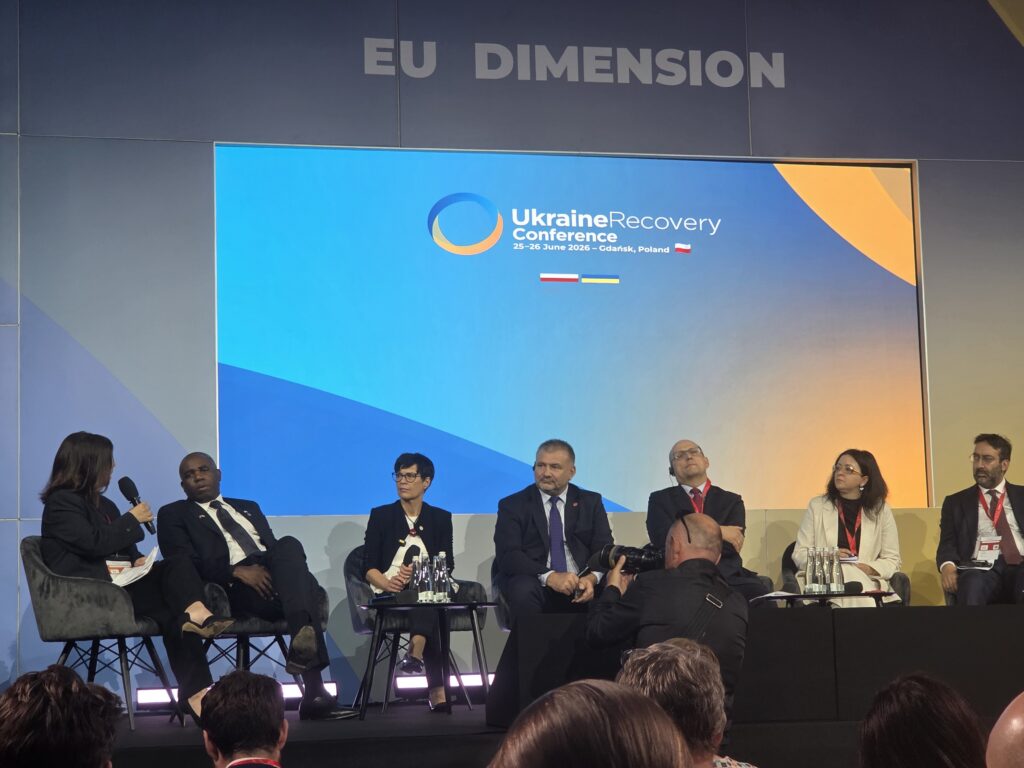
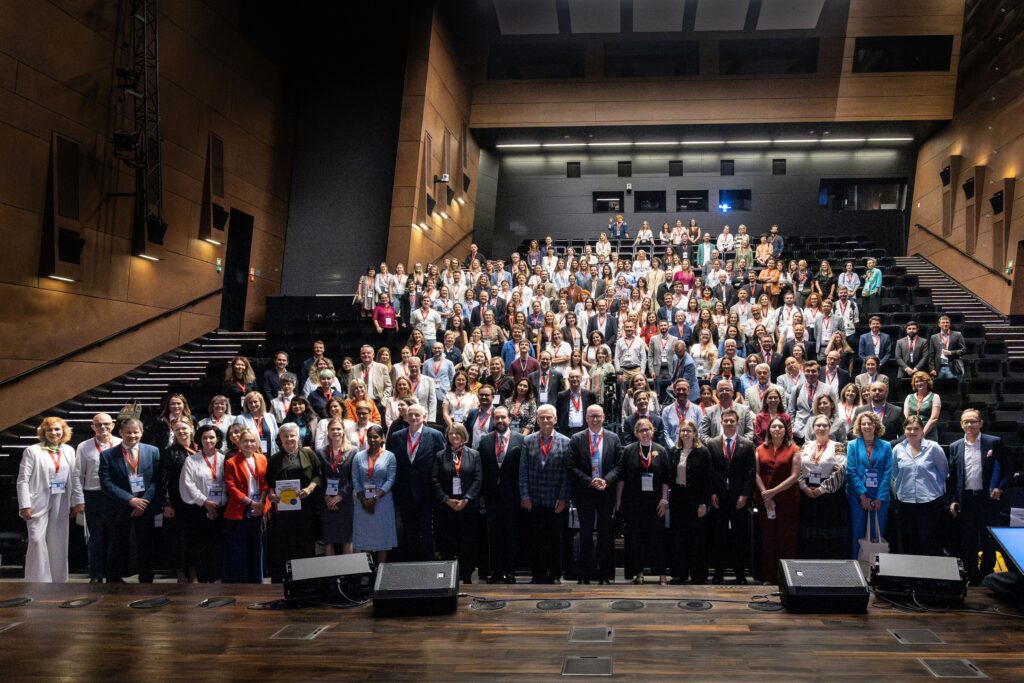
On 25–26 June 2026, the annual Ukraine Recovery Conference (URC) was co-hosted by the Republic of Poland and Ukraine in Gdańsk. Bringing together more than 7,500 participants, the Conference focused on mobilising international support for Ukraine’s recovery, reconstruction and long-term resilience. The Eastern Partnership Civil Society Forum (EaP CSF) and its Ukrainian National Platform (UNP) participated in both the main URC and the Civil Society Forum, held on 24 June. This article summarises some of the discussions, key outcomes and offers reflections and recommendations for the next Ukraine Recovery Conference, which will take place in Tallinn, Estonia, in January 2027.
Civil Society Forum and Gdansk Common Message
Held as a side event to the Ukraine Recovery Conference, the Civil Society Forum emerged as an important platform for open and candid discussion on Ukraine’s recovery. Organised by the European Endowment for Democracy, the International Renaissance Foundation and the Stefan Batory Foundation, together with a broad coalition of Ukrainian and international partners, it filled a crucial gap in the official programme, enabled civil society organisations to speak with a collective voice and present a shared vision for Ukraine’s recovery.
A recurring message throughout the Civil Society Forum was that people are Ukraine’s greatest source of resilience. Speakers reflected on how ordinary citizens, local organisations and volunteers have sustained communities throughout the war, often stepping in where formal institutions could not. Oleksandra Matviichuk (Head of the Center for Civil Liberties, Co-Recipient of the 2022 Nobel Peace Prize) stressed that Ukraine’s strength lies in its grassroots initiatives, where people believe their individual actions matter and, that, together, they have the power to build the country’s future.
The importance of international partnerships and people-to-people contacts was also highlighted. Piotr Łukasiewicz (Chargé d’Affaires ad Interim Embassy of the Republic of Poland in Kyiv) recalled how the volunteer-led delivery of thousands of generators from Poland during the winter of 2026 became one of the strongest examples of Polish-Ukrainian solidarity, demonstrating that lasting partnerships are built first and foremost by people.
Another central theme was the need to integrate civil society more firmly into Ukraine’s recovery architecture, ensuring that it plays a permanent and meaningful role in decision-making. Participants repeatedly stressed that civil society should be recognised as an equal partner, not merely as a watchdog, in designing, implementing and monitoring recovery efforts. It was also acknowledged that civil society has the responsibility to actively contribute solutions and engage constructively with public authorities.
Some of the above messages are reflected in the Gdańsk Common Message, which was presented during the Forum by the Build Back Better Coalition following a broad consultation process with civil society organisations. The Message also calls for a recovery process that is people-centred, locally owned and aligned with Ukraine’s democratic transformation and EU accession. It emphasises that sustainable reconstruction depends on security and a just peace, while advocating for institutionalised civil society participation, strengthened local governance, transparent recovery mechanisms, investment in human capital and social cohesion, and long-term, flexible support from international partners. Rather than presenting a list of demands, it sets out a shared agenda for cooperation, calling on governments, donors, businesses and civil society to jointly shape Ukraine’s recovery.
Ukraine Recovery Conference
URC reaffirmed its role as a key annual international platform for supporting Ukraine, resulting in 160 agreements worth more than €10 billion, including financing for defence, transport, critical infrastructure, housing, businesses, and frontline communities. Some called it the most practical and the largest URC since its inception in Lugano, Switzerland in 2022.
The conference was structured around five thematic priorities: Business Dimension, Human Dimension, Local and Regional Dimension, EU Dimension and, for the first time, the Security and Defence Dimension. The addition of the Security and Defence Dimension was widely welcomed as one of the conference’s most significant innovations. Civil society organisations had advocated for the inclusion of this dimension since the outset of the Ukraine Recovery Conference process, making its adoption a particularly welcome development. Alongside the high-level plenary sessions, the conference featured numerous thematic panels, workshops, and stakeholder platforms, including dedicated exposition places for business, local and regional authorities and a Think Tanks Forum (the full agenda of the conference can be found via this link).
EU Dimension
The panels within this dimension were focused on the rule of law and anti-corruption reforms, the Ukraine Facility as a tool to finance reforms and prepare for EU structural funds, integration into the EU Single Market to enhance competitiveness, green reforms and public administration reform to strengthen governance and support accession.
Notably, during one of the panels, Commissioner Marta Kos highlighted Ukraine’s significant progress in strengthening the rule of law, noting that recent work of its independent anti-corruption institutions demonstrates that reforms are delivering results, but that it is important to continue this path. At the same time, she stressed that while candidate countries must continue meeting all EU accession criteria, the enlargement ultimately depends on the political will of Member States. Calling for a renewed “Helsinki moment,” she urged EU leaders to commit to welcoming Ukraine once it fulfils the required conditions, arguing that enlargement is not only about technical methodology but also about political credibility, confidence and keeping the EU’s promises.
Human Capital
The Human Capital dimension focused on people as the foundation of Ukraine’s recovery, resilience, and long-term European integration. Across the five panels covering this track, discussions highlighted the importance of preserving cultural heritage and strengthening social cohesion, investing in education, skills, and youth to prepare the next generation, improving health and well-being as essential to rebuilding human capital, developing an inclusive and future-oriented labour market that boosts productivity and employment, and advancing social recovery through community participation, social protection, and the return and reintegration of displaced people. Together, the panels underscored that sustainable reconstruction depends not only on rebuilding infrastructure, but also on investing in people, institutions, and opportunities that enable an inclusive, resilient, and prosperous future.
Local and Regional Dimension
The panels under this dimension focused on the role of Ukraine’s regions and communities in sustaining resilience and driving recovery amid the ongoing war. They examined how local actors are maintaining essential services and rebuilding under difficult conditions, including protecting and restoring connectivity and infrastructure. Discussions also addressed the shift from strategy to implementation in regional policy and good governance, and the institutional and governance frameworks needed for effective recovery.
Since the first Ukraine Recovery Conference, the role of local communities has become significantly more visible. Whereas local and regional authorities were largely absent from the initial discussions, they now participate in panels, present their communities in a specifically designated exposition space, organise side events, and are increasingly recognised as key stakeholders in Ukraine’s recovery and European integration. However, despite this recognition, the conference lacked a dedicated panel or workshop examining what the role of communities in recovery and EU integration means in practice, including the specific capacities, tools, and partnerships they need to fulfil this role effectively.
Recommendations for URC 2027
Some of the below recommendations are based on the reflections of civil society representatives during the post-URC event organised by the Ukrainian National Platform of the EaP CSF on 2 July 2026, where participants discussed the conference and identified priorities that should form the basis for preparation for the next Ukraine Recovery Conference in Tallinn.
Ensure space for independent civil society assessments alongside government perspectives to promote evidence-based dialogue and strengthen confidence among international partners. The Civil Society Forum demonstrated that civil society can organise high-level, impactful discussions and develop joint policy messages. Future conferences should build on this by integrating selected civil society sessions and speakers into the official programme.
Dedicate specific sessions to discussing and showcasing practical involvement of local governments in recovery and EU integration. Such panels should also showcase and promote exchanges with EU municipalities and raise awareness of relevant initiatives (e.g. Green City Accord, European Climate Pact) that can help strengthen local governments’ capacity and participation in Ukraine’s recovery.
Continue strengthening the human capital dimension, as also highlighted during the event organised by the EaP CSF in Brussels on 2 June and echoed in participants’ discussions on broadening the conference agenda beyond infrastructure, financing, and reforms to include human potential, social cohesion, culture, tourism, and environmental recovery. The people-centered approach should remain central to recovery policies, with the needs of people and communities guiding reforms, investment programmes, and international support.
Break down sectoral silos and show positive examples of cross-sectoral cooperation. Design the conference to encourage greater interaction between businesses, local and regional governments, civil society, and national authorities. While dedicated sectoral tracks help participants connect with peers, they also reinforce separation. More cross-sector panels, networking formats, case studies of successful collaboration would foster the exchange of ideas, strengthen partnerships, and generate more integrated solutions and whole of society approach for Ukraine’s recovery.
Establish a Civil Society Fair to showcase recovery initiatives led by Ukrainian and international civil society organisations. The fair should bring together civil society, donors, businesses, local authorities and international partners, promote locally driven solutions, facilitate the exchange of good practices and strengthen the visibility of civil society’s contribution to Ukraine’s recovery.
The conference would also benefit from a more interactive discussion format. While government representatives played a central role in many panels, there was limited opportunity for meaningful exchange with other stakeholders, including civil society, local authorities, businesses, and international partners. Future editions should place greater emphasis on balanced, multi-stakeholder discussions and allocate sufficient time for questions and audience engagement, enabling a genuine exchange of perspectives rather than a series of prepared statements.
This publication has been produced with the assistance of the European Union. Its contents are the sole responsibility of the Eastern Partnership Civil Society Forum and do not necessarily reflect the views of the European Union.
Photo: European Endowment for Democracy, Civil Society Forum
The interview was conducted with Sergiu Gurau, Executive Director of Eco-Răzeni.
Eco-Răzeni is a member of the Eastern Partnership Civil Society Forum and an NGO based in Moldova whose creation dates back to 1998. Since its beginnings, the NGO has aimed to improve socio-economic conditions, especially those of young people; a vulnerable group that is often exposed to risks such as emigration, poverty, unemployment, and limited access to quality education and information.
Eco-Răzeni has worked in various fields, both with the involvement of young people and for young people, on topics such as facilitating access to information, providing trainings in IT and communication technologies, providing ecological education, and promoting the participation of young people in community life.
Read on to discover more about one of their projects below:
Could you briefly describe the Ialoveni Youth Fund project operated by Eco-Răzeni?
Sergiu Gurau: “The Ialoveni Youth Fund is a mini-grant program dedicated to young people in the Ialoveni district. It has been active since April 2010 and is implemented by Eco-Răzeni, in partnership with and using funds allocated by the Ialoveni District Council, following the Youth Bank International methodology.
“Its mission is to empower young people themselves: young people propose ideas, evaluate their peers’ projects, and decide which initiatives deserve funding.”
The Fund operates through competitive rounds held twice a year (in the spring and fall), in which teams of 3–7 young people from communities across the district submit small-scale projects with local impact—such as cultural, civic, environmental, sports, or personal development activities—implemented with budgets of approximately 500 euros per project. To date, the Fund has supported over 780 projects with a total budget of over 490 000 euros, representing one of the longest-running and most consistent implementations of the Youth Bank methodology in the Republic of Moldova.”
Do you plan to expand the grants offered to regions outside the Ialoveni district? If so, to which regions? Do you hope this project will become a national standard in Moldova in the future?
Sergiu Gurau: “The Ialoveni Youth Fund was designed as a district-level program, deeply rooted in the community and local government of Ialoveni District. Its sustainability stems precisely from this local integration, the partnership with the Ialoveni District Council and social actors in the region, an understanding of the local context, and the relationships built over 15 years of activity.
We do not plan to expand directly into other districts, as the Youth Bank model works best when it is locally owned and co-funded, rather than imported. Instead, we actively support the replication of this methodology by other organisations in Moldova through exchanges of experience and within the civic networks in which we participate. We believe this is the right path toward national standardisation: not a centralised program, but a network of autonomous local funds, each with its own identity and community support.”
What results have you observed as a result of the project?
Sergiu Gurau: “More than 780 projects funded over 15 years represent the most visible figure. Beyond that, the most significant impact is measured in people’s life trajectories and in structural changes at the community level.
“Among the thousands of young men and women who have participated in the program, we now find 2 female mayors and 17 local council members, along with teachers, doctors, police officers, entrepreneurs, and civic activists active at the national level—people who, at the age of 15 or 16, led their first project through the Fund”
We cannot claim that the program shaped them entirely on its own, but it did offer them their first real opportunity to exercise responsibility, make decisions, and take initiative.
At the community level, in more than two-thirds of the district’s localities, young people have gained recognised status within public institutions: they are consulted on local decisions, specific funds are allocated for their initiatives, and youth participation is an institutionalised practice. This is likely the Fund’s most enduring legacy—the culture of participation it has fostered.”
Gdańsk (Poland), 24 June 2026 – The Eastern Partnership Civil Society Forum (EaP CSF) and the Ukrainian National Platform of the EaP CSF endorsed the Gdańsk Common Message published for the occasion of the Ukraine Recovery Conference. Read the full message below.
At a defining moment for Ukraine’s future, civil society speaks with a united voice. The Gdańsk Common Message sets out a shared contribution to the global conversation on Ukraine’s recovery and European path, bringing together the perspectives and expertise of Ukrainian and international civil society organisations. Developed ahead of the Ukraine Recovery Conference 2026, it is addressed to Ukrainian national authorities, international partners, and all those shaping recovery efforts. It serves as a benchmark for the Ukraine Donor Platform and its members to track whether commitments are translated into real action.
We emphasise that Ukraine’s recovery must be people-centred, grounded in human rights, and built as a genuine partnership in which civil society acts not just as a participant but as a strategic partner. Throughout Russia’s war against Ukraine, civil society has been at the forefront of the national response. It has mobilised billions of hryvnias in support for defence and security, delivered immediate humanitarian assistance, strengthened local resilience, and driven innovation in the most challenging conditions. Civil society organisations have supported Ukraine’s EU integration and reform path by helping develop public policies and providing independent expertise, piloted sustainable reconstruction initiatives and developed tools that advance transparency and accountability. We call for accountability and action that will remove barriers to further collaboration and true cross-sectoral partnership for making the recovery deliver.
Gdańsk, with its legacy of solidarity, civic participation, and democratic transformation, provides a powerful setting for this Message. It reminds us that lasting change is driven by engaged citizens and shared responsibility. In this spirit, we call on all partners to ensure that the principles of the Gdańsk Common Message guide decisions, investments, and actions shaping Ukraine’s recovery trajectory.
Our Vision for Recovery
We envision a people-centred and rights-based recovery for Ukraine, grounded in security and justice as indispensable preconditions for lasting peace in Europe. Recovery must continue even amid ongoing hostilities, but it can only fully take root when Ukraine is safe through a complete cessation of aggression, credible security guarantees, protection and strengthened resilience for its people and infrastructure. A just and lasting peace is essential and must include accountability for aggression, prosecution of war crimes, and legally binding reparations by Russia. Without security and justice, recovery efforts will be fragile and incomplete. Recovery must be inclusive, participatory, professionally delivered and locally owned, with full participation of civil society as an equal partner at all stages.
Priority Actions
Delivering this vision will require changes not only in what recovery actors fund, but also in how recovery decisions are made and implemented. The following actions identify practical steps that the Government of Ukraine, international partners, and civil society can take to translate these principles into lasting change.
We call on the Government of Ukraine and international partners to jointly ensure that:
Civil society is recognised as a co-author of recovery, including through structured mechanisms and formats for regular and meaningful engagement with the Ukraine Donor Platform
Reform commitments for European integration are translated into action by embedding human rights, anti-corruption safeguards, and the rule of law across all stages of recovery
Humanitarian, early response, and development financing form coherent pathways toward long-term resilience and recovery by aligning funding instruments to support displaced populations and affected communities from emergency response to sustainable economic development and social participation
Energy resilience is further strengthened through the development of decentralised, renewable-based systems that enhance security, support recovery, and ensure reliable access to critical services across communities
Long-term investments in people and essential social services are prioritised, including dedicated financing for affordable housing, social infrastructure, healthcare, education, workforce development, youth leadership, mental health services, and rehabilitation that enables Ukrainians to live, return, and thrive in their communities
Coordinated frameworks for strengthening social cohesion and facilitating return, (re)integration, and inclusion are developed tosupport veterans, displaced Ukrainians, persons with disabilities, and other groups disproportionately affected, ensuring no one is left behind
Structured partnerships connect Ukrainian and European institutions and communities to support peer learning, project preparation, participatory planning, co-financing, monitoring, public consultation, and alignment with EU standards
Additionally, we call on the Government of Ukraine to ensure that:
Integrated development strategies are created at all levels, ensuring that recovery priorities are locally driven, informed by community needs, and designed in partnership with civil society, local authorities, businesses, and affected populations
National and local institutions are equipped to lead recovery and EU integration by advancing public administration reform, better coordinating technical assistance, and developing measures to attract, retain, and empower qualified public servants
Mechanisms for participation are institutionalised across recovery governance, including through implementation of the Law of Ukraine “On Public Consultations” and regular engagement with civil society, communities, and affected groups
Culture and independent media are recognised as cross-cutting and essential components of identity, social resilience and democratic participation, and their durability is supported as part of recovery investments
Environmental safeguards are upheld across all the sectors of the economy through implementation of EU‑aligned policies, in particular environmental assessments, monitoring, control and nature conservation, so that recovery accelerates accession readiness and builds country’s resilience
Additionally, we call on international partners and the Ukraine Donor Platform to ensure that:
Direct, flexible, and multi-year financing is expanded for local recovery actors, including civil society, community initiatives, and social enterprises, while simplifying compliance requirements and reducing reliance on international intermediaries
Recovery moves beyond fragmented projects toward integrated, locally owned approaches, including by reducing the disconnect between international donor frameworks and community-level interventions that give communities greater decision-making power and support a more coherent approach to building back better
Frameworks for social and economic inclusion are strengthened through qualification recognition, skills development, psychosocial support, rehabilitation, and (re)integration programmes for displaced Ukrainians, veterans, persons with disabilities, and other affected groups, enabling their participation in the labour market and society.
On 2 June 2026, the Eastern Partnership Civil Society Forum (EaP CSF), in cooperation with the Ukrainian National Platform, the Stefan Batory Foundation and the European Endowment for Democracy, organised the event “The Role of Civil Society in Recovery and EU Integration of Ukraine.” The event was hosted by the Permanent Representation of the Republic of Poland to the European Union (EU), and with the support of the Mission of Ukraine to the European Union.
Bringing together over 80 participants from civil society organisations, EU institutions, Member State representations, media and other stakeholders, the event served as a platform for dialogue ahead of the Ukraine Recovery Conference (URC) in Gdańsk, Poland. Two thematic panels focused on preserving and restoring human capital and advancing EU integration.
The speakers included:
Mr Arkadiusz Plucinski, Deputy Head of the Permanent Representation of the Republic of Poland to the European Union, Minister-Counsellor
Ms Oksana Diakun, Deputy Head of the Mission of Ukraine to the European Union
Ms Marta Wytrykowska, Deputy Head of Division for Ukraine, Eastern Europe and Central Asia, Secretariat-General, European External Action Service
Ms Iryna Kuropas, Project Manager, Local Economic Development Agency of the Yavoriv District, Eastern Partnership Civil Society Forum
Ms Anna Fedas, International Cooperation Program Coordinator, Stefan Batory Foundation
Mr Wolfgang Nozar, Head of Unit for Governance, Rule of Law, Financial Assistance, ENEST.D.3, Ukraine Service, Directorate-General for Enlargement and Eastern Neighbourhood, European Commission
Ms Ingrid Kressel, Director of the Development Cooperation Division, Ministry of Foreign Affairs of the Republic of Estonia
Ms Zoryana Makarukha, Counsellor, Mission of Ukraine to the European Union
Ms Nataliya Andrusevych, Head of the Board, Resource and Analysis Center “Society and Environment”, Eastern Partnership Civil Society Forum
Ms Liubov Akulenko, Executive Director, Ukrainian Centre for European Policy
Mr Andrea Raimondi, Director, Eastern Partnership Civil Society Forum Secretariat
The sessions were moderated by Dr Marcin Walecki, Oxford University and European Endowment for Democracy Consultant and Mr Hennadiy Maksak, Executive Director, Foreign Policy Council “Ukrainian Prism”.
A common message throughout the discussions was that civil society is a key actor in shaping and helping to implement different policies, monitoring reforms, promoting transparency and accountability and ensuring that recovery remains citizen-centred and responsive to local needs.
We invite you to read the post-event report below or by clicking this link.
The Eastern Partnership Civil Society Forum (EaP CSF) was pleased to participate in the OECD GREEN Action Task Force Annual Meeting on 15-16 June 2026 in Paris. The meeting brought together government representatives, international organisations, financial institutions and civil society to discuss key priorities for advancing environmental sustainability and resilience across Eastern Europe, Caucasus and Central Asia.
Representing EaP CSF Working Group 3, Ruslan Havryliuk highlighted key priorities for the Eastern Partnership region and underscored the essential role of civil society in supporting environmental reforms and resilience-building efforts. Special attention was paid to the continued impacts of Russia’s war of aggression against Ukraine, which extend beyond Ukraine’s borders and affect environmental security, water resources management and ecosystem resilience across the wider Eastern Partnership region.
Among the key water-related challenges and priorities, Ruslan Havryliuk highlighted:
– Improving access to transparent, reliable and publicly available data on water resources and water management;
– Strengthening water monitoring systems through enhanced technical capacities, laboratory infrastructure and groundwater and surface water monitoring. This is particularly important for Ukraine, where robust monitoring is essential for implementing river basin management plans and assessing the environmental impacts of Russia’s war of aggression;
– Raising public awareness of sustainable water use and promoting responsible water consumption practices among citizens, communities and stakeholders.
While important progress has been made in advancing water governance and environmental protection across the region, further efforts and enhanced cooperation remain necessary to address existing challenges and ensure the sustainable management of water resources.
We thank the OECD for the invitation and the opportunity to contribute to this important exchange. We look forward to continuing cooperation with the OECD, the European Commission, EU Member States, Eastern Partnership governments and other partners to advance environmental protection, climate resilience and sustainable development across the Eastern Partnership countries.
The opening of the cluster on fundamentals at the Intergovernmental Conference on 15 June marks a historic moment for the Republic of Moldova, Ukraine and the European Union. This cluster is a backbone of the negotiation process, setting essential standards for the rule of law, democratic institutions, judicial reform, and economic criteria that must be met to advance toward EU membership. The Eastern Partnership Civil Society Forum (EaP CSF) has repeatedly called for this step in recognition of the significant progress achieved by both countries and as an important milestone in advancing the EU enlargement process.
Enlargement is not only a strategic choice; it is a strategic necessity. The decision to advance accession negotiations with Moldova and Ukraine reflects the EU’s commitment to a Europe that is united, secure and founded on democratic values, the rule of law and respect for fundamental rights.
This is also an important signal for other Eastern Partnership countries because it shows that reforms and commitment to European values are recognised and rewarded. We also want to reiterate that the Eastern Partnership policy provides important synergies with the enlargement process, supporting reform efforts and enabling partner countries willing to advance on the European path to accelerate their alignment with EU standards.
While this represents an important milestone, a lot of work still lies ahead. The process of preparing for EU membership requires significant effort and resources, including strong administrative capacity of public institutions, sustained political commitment and the active involvement of all stakeholders engaged in reform and European integration. Progress must be measured not only by the formal transposition of EU legislation, but also by the quality, inclusiveness and sustainability of reforms in practice. In this regard, civil society organisations are already playing and will continue to play a vital role by supporting the development and assessment of strategic documents, legislation and implementing measures; monitoring the fulfilment of accession benchmarks; and informing citizens about the progress, opportunities and challenges associated with European integration.
Drawing on extensive expertise and experience accumulated through years of engagement with reform processes and EU integration, the Moldovan and Ukrainian National Platforms of the EaP CSF stand ready to continue contributing to the successful advancement of both countries on their path towards EU membership.
To be able to do so, civil society must always be at the table. As highlighted by the Position of the Ukrainian National Platform of the EaP CSF, civil society organisations need to be fully included in accession-related policymaking and implementation. The accession process should not create pressure to fast-track legislation without adequate consultation and scrutiny. This principle is equally relevant for both Moldova and Ukraine. Meaningful participation of civil society in consultations, monitoring mechanisms, legislative processes and other relevant decision-making structures is indispensable for ensuring transparency, accountability and public ownership of reforms.
Recalling the EaP CSF Resolution 2025, we call on the EU to review political and institutional preparedness for future enlargement and, where necessary, to undertake reforms to ensure effective functioning in an enlarged Union.
The opening of the cluster on fundamentals is an important achievement and the beginning of a demanding new stage. We commend the Governments of the Republic of Moldova and of Ukraine for the progress achieved so far and call on them to continue accelerating European integration efforts, ensure the effective implementation of Association Agreements, and further strengthen democratic institutions, good governance and the rule of law.
The accession process is taking place in a particularly challenging environment, marked by external interference and disinformation campaigns aimed at undermining public support for European integration. In this context, it is essential to ensure that reform momentum is anchored in strong, independent institutions and lasting structural guarantees, rather than relying solely on political will.
The opening of all remaining negotiation clusters in July 2026 will be important to maintain the overall pace of the accession process, support the continued implementation of reforms across all policy areas and facilitate progress in meeting benchmarks under other chapters. We therefore encourage the opening of all remaining clusters as soon as possible, in line with the merits-based nature of the accession process.
The ultimate decision on enlargement will be taken in the capitals of the EU Member States. Therefore, it is important to intensify efforts to build public and political support across the Union. Civil society from the EaP and EU Member States can play a role in these efforts by promoting a better understanding of the benefits of enlargement and communicating the progress of reforms taking place in Moldova and Ukraine.
The Moldovan and Ukrainian National Platforms and the Steering Committee of the Eastern Partnership Civil Society Forum remain committed to working together with national authorities, EU institutions and international partners to ensure that the European aspirations of the citizens of Moldova and Ukraine are successfully translated into EU membership.
Photo credits: European Commission (2024), Two years of Solidarity Lanes have brought the EU, Ukraine and Moldova closer together – https://enlargement.ec.europa.eu/news/two-years-solidarity-lanes-have-brought-eu-ukraine-and-moldova-closer-together-2024-05-22_en