- Reports

On 25–26 June 2026, the annual Ukraine Recovery Conference (URC) was co-hosted by the Republic of Poland and Ukraine in Gdańsk. Bringing together more than 7,500 participants, the Conference focused on mobilising international support for Ukraine’s recovery, reconstruction and long-term resilience. The Eastern Partnership Civil Society Forum (EaP CSF) and its Ukrainian National Platform (UNP) participated in both the main URC and the Civil Society Forum, held on 24 June. This article summarises some of the discussions, key outcomes and offers reflections and recommendations for the next Ukraine Recovery Conference, which will take place in Tallinn, Estonia, in January 2027.
Civil Society Forum and Gdansk Common Message
Held as a side event to the Ukraine Recovery Conference, the Civil Society Forum emerged as an important platform for open and candid discussion on Ukraine’s recovery. Organised by the European Endowment for Democracy, the International Renaissance Foundation and the Stefan Batory Foundation, together with a broad coalition of Ukrainian and international partners, it filled a crucial gap in the official programme, enabled civil society organisations to speak with a collective voice and present a shared vision for Ukraine’s recovery.
A recurring message throughout the Civil Society Forum was that people are Ukraine’s greatest source of resilience. Speakers reflected on how ordinary citizens, local organisations and volunteers have sustained communities throughout the war, often stepping in where formal institutions could not. Oleksandra Matviichuk (Head of the Center for Civil Liberties, Co-Recipient of the 2022 Nobel Peace Prize) stressed that Ukraine’s strength lies in its grassroots initiatives, where people believe their individual actions matter and, that, together, they have the power to build the country’s future.
The importance of international partnerships and people-to-people contacts was also highlighted. Piotr Łukasiewicz (Chargé d’Affaires ad Interim Embassy of the Republic of Poland in Kyiv) recalled how the volunteer-led delivery of thousands of generators from Poland during the winter of 2026 became one of the strongest examples of Polish-Ukrainian solidarity, demonstrating that lasting partnerships are built first and foremost by people.
Another central theme was the need to integrate civil society more firmly into Ukraine’s recovery architecture, ensuring that it plays a permanent and meaningful role in decision-making. Participants repeatedly stressed that civil society should be recognised as an equal partner, not merely as a watchdog, in designing, implementing and monitoring recovery efforts. It was also acknowledged that civil society has the responsibility to actively contribute solutions and engage constructively with public authorities.
Some of the above messages are reflected in the Gdańsk Common Message, which was presented during the Forum by the Build Back Better Coalition following a broad consultation process with civil society organisations. The Message also calls for a recovery process that is people-centred, locally owned and aligned with Ukraine’s democratic transformation and EU accession. It emphasises that sustainable reconstruction depends on security and a just peace, while advocating for institutionalised civil society participation, strengthened local governance, transparent recovery mechanisms, investment in human capital and social cohesion, and long-term, flexible support from international partners. Rather than presenting a list of demands, it sets out a shared agenda for cooperation, calling on governments, donors, businesses and civil society to jointly shape Ukraine’s recovery.
Ukraine Recovery Conference
URC reaffirmed its role as a key annual international platform for supporting Ukraine, resulting in 160 agreements worth more than €10 billion, including financing for defence, transport, critical infrastructure, housing, businesses, and frontline communities. Some called it the most practical and the largest URC since its inception in Lugano, Switzerland in 2022.
The conference was structured around five thematic priorities: Business Dimension, Human Dimension, Local and Regional Dimension, EU Dimension and, for the first time, the Security and Defence Dimension. The addition of the Security and Defence Dimension was widely welcomed as one of the conference’s most significant innovations. Civil society organisations had advocated for the inclusion of this dimension since the outset of the Ukraine Recovery Conference process, making its adoption a particularly welcome development. Alongside the high-level plenary sessions, the conference featured numerous thematic panels, workshops, and stakeholder platforms, including dedicated exposition places for business, local and regional authorities and a Think Tanks Forum (the full agenda of the conference can be found via this link).
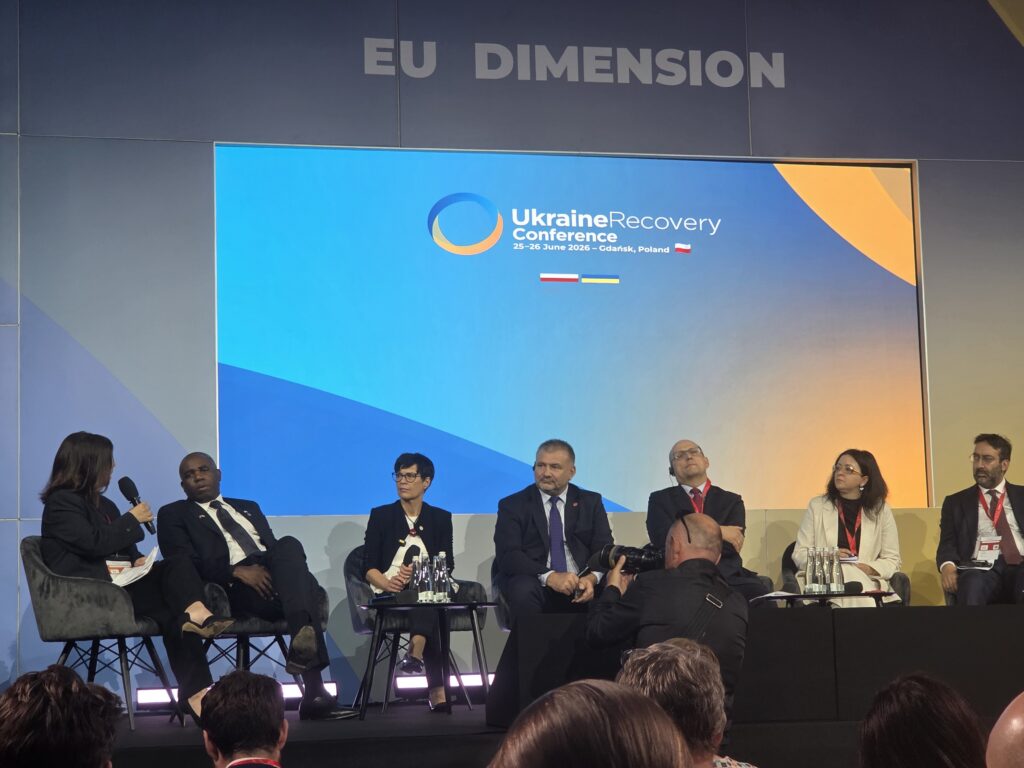
EU Dimension
The panels within this dimension were focused on the rule of law and anti-corruption reforms, the Ukraine Facility as a tool to finance reforms and prepare for EU structural funds, integration into the EU Single Market to enhance competitiveness, green reforms and public administration reform to strengthen governance and support accession.
Notably, during one of the panels, Commissioner Marta Kos highlighted Ukraine’s significant progress in strengthening the rule of law, noting that recent work of its independent anti-corruption institutions demonstrates that reforms are delivering results, but that it is important to continue this path. At the same time, she stressed that while candidate countries must continue meeting all EU accession criteria, the enlargement ultimately depends on the political will of Member States. Calling for a renewed “Helsinki moment,” she urged EU leaders to commit to welcoming Ukraine once it fulfils the required conditions, arguing that enlargement is not only about technical methodology but also about political credibility, confidence and keeping the EU’s promises.
Human Capital
The Human Capital dimension focused on people as the foundation of Ukraine’s recovery, resilience, and long-term European integration. Across the five panels covering this track, discussions highlighted the importance of preserving cultural heritage and strengthening social cohesion, investing in education, skills, and youth to prepare the next generation, improving health and well-being as essential to rebuilding human capital, developing an inclusive and future-oriented labour market that boosts productivity and employment, and advancing social recovery through community participation, social protection, and the return and reintegration of displaced people. Together, the panels underscored that sustainable reconstruction depends not only on rebuilding infrastructure, but also on investing in people, institutions, and opportunities that enable an inclusive, resilient, and prosperous future.
Local and Regional Dimension
The panels under this dimension focused on the role of Ukraine’s regions and communities in sustaining resilience and driving recovery amid the ongoing war. They examined how local actors are maintaining essential services and rebuilding under difficult conditions, including protecting and restoring connectivity and infrastructure. Discussions also addressed the shift from strategy to implementation in regional policy and good governance, and the institutional and governance frameworks needed for effective recovery.
Since the first Ukraine Recovery Conference, the role of local communities has become significantly more visible. Whereas local and regional authorities were largely absent from the initial discussions, they now participate in panels, present their communities in a specifically designated exposition space, organise side events, and are increasingly recognised as key stakeholders in Ukraine’s recovery and European integration. However, despite this recognition, the conference lacked a dedicated panel or workshop examining what the role of communities in recovery and EU integration means in practice, including the specific capacities, tools, and partnerships they need to fulfil this role effectively.
Recommendations for URC 2027
Some of the below recommendations are based on the reflections of civil society representatives during the post-URC event organised by the Ukrainian National Platform of the EaP CSF on 2 July 2026, where participants discussed the conference and identified priorities that should form the basis for preparation for the next Ukraine Recovery Conference in Tallinn.
- Ensure space for independent civil society assessments alongside government perspectives to promote evidence-based dialogue and strengthen confidence among international partners. The Civil Society Forum demonstrated that civil society can organise high-level, impactful discussions and develop joint policy messages. Future conferences should build on this by integrating selected civil society sessions and speakers into the official programme.
- Dedicate specific sessions to discussing and showcasing practical involvement of local governments in recovery and EU integration. Such panels should also showcase and promote exchanges with EU municipalities and raise awareness of relevant initiatives (e.g. Green City Accord, European Climate Pact) that can help strengthen local governments’ capacity and participation in Ukraine’s recovery.
- Continue strengthening the human capital dimension, as also highlighted during the event organised by the EaP CSF in Brussels on 2 June and echoed in participants’ discussions on broadening the conference agenda beyond infrastructure, financing, and reforms to include human potential, social cohesion, culture, tourism, and environmental recovery. The people-centered approach should remain central to recovery policies, with the needs of people and communities guiding reforms, investment programmes, and international support.
- Break down sectoral silos and show positive examples of cross-sectoral cooperation. Design the conference to encourage greater interaction between businesses, local and regional governments, civil society, and national authorities. While dedicated sectoral tracks help participants connect with peers, they also reinforce separation. More cross-sector panels, networking formats, case studies of successful collaboration would foster the exchange of ideas, strengthen partnerships, and generate more integrated solutions and whole of society approach for Ukraine’s recovery.
- Establish a Civil Society Fair to showcase recovery initiatives led by Ukrainian and international civil society organisations. The fair should bring together civil society, donors, businesses, local authorities and international partners, promote locally driven solutions, facilitate the exchange of good practices and strengthen the visibility of civil society’s contribution to Ukraine’s recovery.
- The conference would also benefit from a more interactive discussion format. While government representatives played a central role in many panels, there was limited opportunity for meaningful exchange with other stakeholders, including civil society, local authorities, businesses, and international partners. Future editions should place greater emphasis on balanced, multi-stakeholder discussions and allocate sufficient time for questions and audience engagement, enabling a genuine exchange of perspectives rather than a series of prepared statements.
This publication has been produced with the assistance of the European Union. Its contents are the sole responsibility of the Eastern Partnership Civil Society Forum and do not necessarily reflect the views of the European Union.
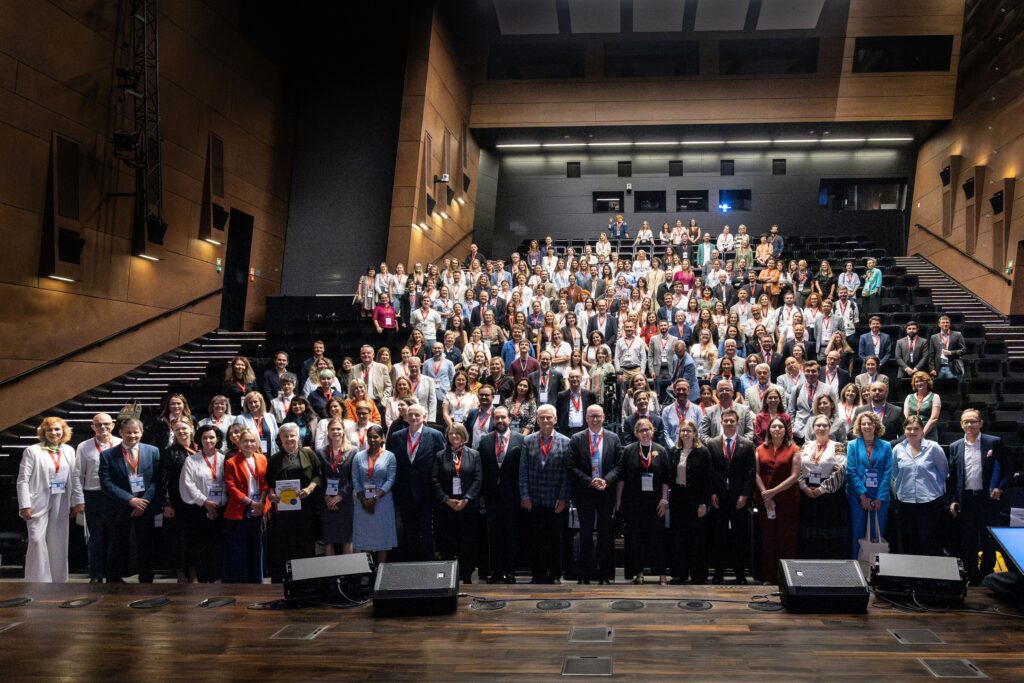
Photo: European Endowment for Democracy, Civil Society Forum
